
7 Daily Habits to Extend Equipment Lifespan: The Ultimate Aesthetic Laser Maintenance Guide

In the modern medical aesthetic clinic, your laser is more than a tool—it is your most valuable financial asset. However, precision engineering requires precision care. As noted by industry leaders like Candela, maintenance is not just about avoiding repairs; it’s about ensuring consistent clinical outcomes. This Aesthetic Laser Maintenance Guide outlines the seven daily habits used by top-tier technicians to extend device lifespan and maximize ROI.
1. The Critical "Why": Preventing 90% of Equipment Failures
Most clinics view maintenance as a reactive task. In reality, 90% of laser failures—such as cracked laser rods or degraded diode modules—stem from microscopic neglect. A single speck of dust or mineral buildup can cause "thermal runaway," leading to downtime that costs thousands in lost appointments. Transitioning to a proactive SOP (Standard Operating Procedure) is the only way to safeguard your clinic’s reputation.

2. Daily Checklist: Your Aesthetic Laser Maintenance Guide to Optimal Care
To maintain "Gold Standard" performance, your staff must adhere to these seven technical details daily.
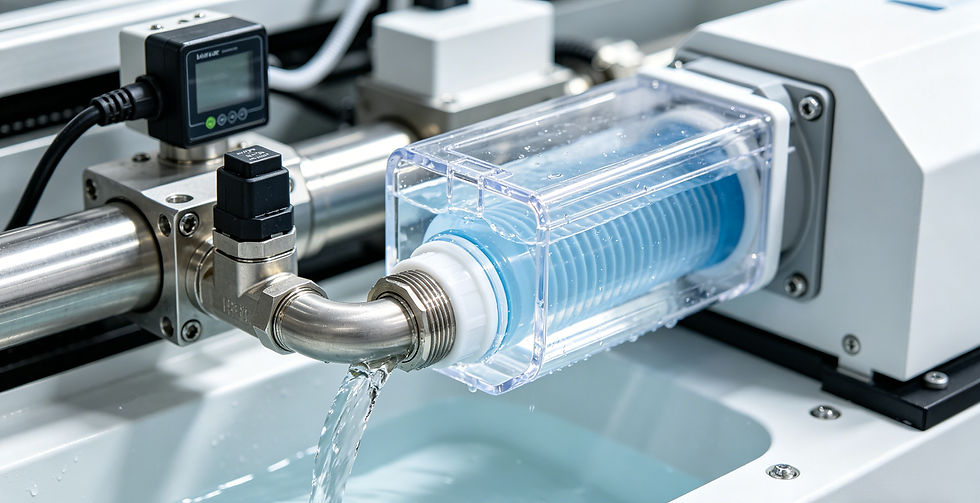
I. The Cooling System (The Lifeblood)
Habit 1: Use Only High-Purity Deionized Water: Using tap or bottled water leads to mineral scaling. Over time, this acts as an insulator, preventing the heat from leaving the laser source, eventually causing the system to overheat and fail.
Habit 2: Monitor Flow Alarms and Water Quality: Check for any "pink slime" or turbidity in the tank. Biological growth can clog narrow cooling channels inside the handpiece.
Habit 3: Scheduled Filter Replacement: Filters should be inspected monthly. A clogged filter puts undue strain on the internal pump, leading to expensive hydraulic failures.
II. The Optical Path (The Precision)
Habit 4: The 99% Alcohol Protocol: Clean treatment windows and lenses with 99% Anhydrous Isopropyl Alcohol only. Standard 70% alcohol leaves a residue that can burn into the glass when the laser fires, causing "burn spots."
Habit 5: Handpiece Integrity: Avoid even minor bumps. As Link 1 emphasizes, physical impact can misalign the internal mirrors (resonator), resulting in an uneven beam profile that could cause unexpected patient burns.
III. The Environment (The Foundation)
Habit 6: HVAC and Humidity Control: Lasers are sensitive to dust and humidity. Ensure your room has high-quality air filtration and a steady temperature of 20°C–25°C to prevent internal condensation.
Habit 7: Voltage Stabilization: Always use a dedicated medical-grade surge protector. Power spikes are a leading cause of fried circuit boards and CPU errors in aesthetic devices.
3. Beyond Daily Habits:
While daily habits are crucial, this Aesthetic Laser Maintenance Guide would be incomplete without emphasizing Preventive Maintenance (PM) visits.
Calibration is Key: Over time, laser energy "drifts." A professional technician uses an external power meter to ensure the energy displayed on the screen matches the energy hitting the patient’s skin.
OEM Parts: Always insist on Original Equipment Manufacturer (OEM) flashlamps and fibers. Third-party components often lack the proper coating, which can shorten the lifespan of your laser power supply.
Frequently Asked Questions (FAQ)
Q1: How do I know if my laser lens is damaged?
A: Inspect the lens under a bright light. If you see tiny black dots or a "pitting" effect that doesn't wipe away with alcohol, these are burn spots. The lens must be replaced immediately to prevent the energy from reflecting back into the device.
Q2: Why does the room temperature matter so much for my laser?
A: Medical lasers generate extreme heat. If the ambient air is too warm, the internal heat exchangers cannot work efficiently. This triggers "High Temp" errors and forces the machine to shut down, disrupting your clinic schedule.
Q3: Is it okay to leave the laser on "Standby" all day?
A: It is better to leave the machine in standby between back-to-back patients, but you should perform a full power-down at the end of the day. This allows the electronics to cool and prevents unnecessary wear on the cooling pump and internal sensors.
Conclusion: Turning Maintenance into Profit
A clinic that follows this Aesthetic Laser Maintenance Guide experiences fewer cancellations, lower repair bills, and superior patient results. Reliability isn't an accident—it’s the result of disciplined daily habits and professional oversight.
[Download our Professional "Daily Laser Care & Shot-Count Log" to standardize your clinic’s maintenance today.]
Need help choosing the right aesthetic equipment for your business?
Stellayjoy helps distributors, clinics, spas and private-label buyers explore suitable equipment options, product combinations and OEM/ODM customization paths.
Contact us for product recommendations or cooperation details:
Email: chao@stellayjoy.net
CTA Button:Contact Stellayjoy


