
Navigating the Tier-1 Market: The Ultimate Guide to the Best CO2 Laser Brands for Clinics in 2026

In the medical aesthetic industry of 2026, fractional CO2 lasers remain the absolute gold standard for structural skin remodeling, deep acne scar revision, and non-surgical facial rejuvenation. However, for international distributors, medical device importers, and premium MedSpa directors, navigating the manufacturing landscape is a high-stakes challenge.
On the surface, many devices present similar outer casings and touchscreens. Under the hood, however, the gap between a generic platform and a world-class system dictates your clinical safety, patient downtime, and ultimate business reputation.
To help you secure a reliable clinical asset, this comprehensive guide provides an objective framework to benchmark manufacturers, ranking them based on scanner precision, advanced pulse control, global certifications, and after-sales infrastructure.
1. The Engineering Pillars: Scanner Precision & Pulse Control
When analyzing professional carbon dioxide lasers, you must evaluate the hardware through a strictly clinical and physics-driven framework. The two most critical technical differentiators are how the laser beam is controlled and how it enters human tissue.
      STANDARD CONTINUOUS PULSE                    SMART MODULATED PULSE
     (High Side-Thermal Damage)                 (Controlled Ablation & Coagulation)
        ┌──────────────────┐                           ┌───┐       ┌───┐
        │                  │                           │   │       │   │
  ──────┴──────────────────┴──────               ──────┴───┴───────┴───┴──────
     Prolonged heat = High PIH Risk                 Sharp Peak = Safe, Fast Healing
A. Micro-Scanner Galvanometer Precision
The scanner inside the handpiece determines the exact positioning of each fractional micro-thermal zone (MTZ).
Generic Systems: Utilize low-grade scanner motors that suffer from mechanical jitter. This causes uneven spot distribution or overlapping dots, leading to localized heat stacking, accidental epidermal burns, and severe Post-Inflammatory Hyperpigmentation (PIH).
Premium Platforms: Deploy high-speed, military-grade galvanometer scanners. They support randomized, alternating, and scatter-scanning patterns, ensuring adjacent areas are never fired sequentially. This allows the skin tissue to cool down efficiently between pulses, reducing patient pain by up to 50%.
B. Dynamic Pulse Control Profile Modifications
Ablation (vaporizing tissue) and coagulation (heating tissue to stimulate collagen) must be balanced perfectly.
Leading global innovators—most notably DEKA with their advanced pulse modulation and the highly sought-after Helix laser treatments—have revolutionized this space. They utilize sophisticated pulse shapes (such as SmartPulse, D-Pulse, and H-Pulse) that deliver an ultra-high energy peak in microseconds to ablate cleanly, followed immediately by a lower-energy thermal tail to stimulate deep dermal collagen.
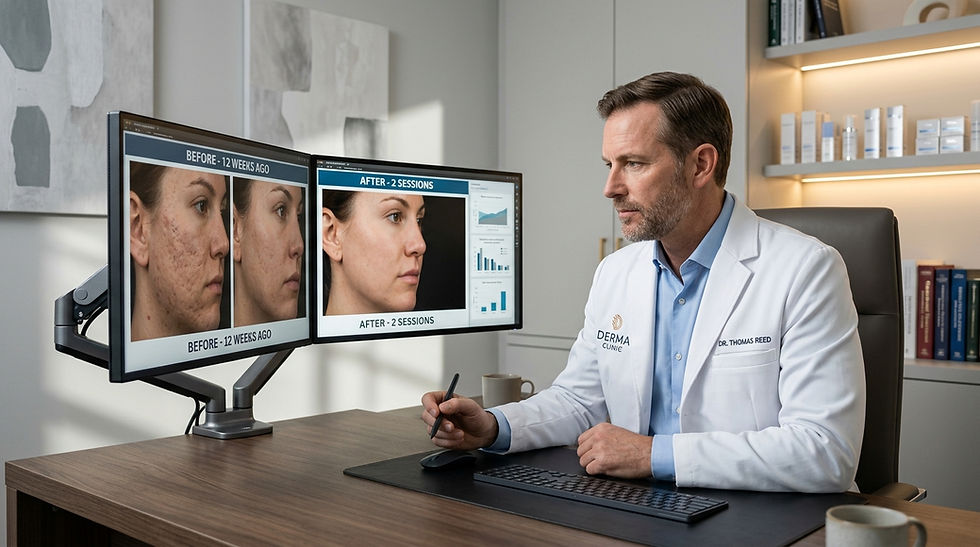
This dual-action control is why premium Helix and DEKA before-and-after results show dramatic scar clearing and face tightening in just 1 to 2 sessions with a fraction of the downtime required by traditional, unmodulated CO2 lasers.
2. The Operational Shield: Certification, Training, and Service Infrastructure
An excellent optical bench is useless if the machine faces extended downtime due to a lack of supplier support or regulatory clearance.
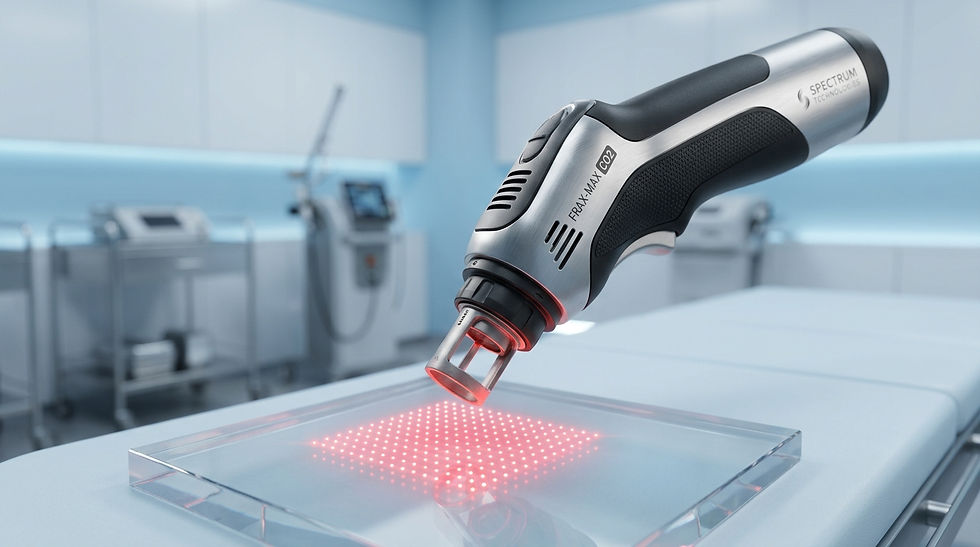
Evaluating Technical Benchmarks of the Best CO2 Laser Brands for Clinics
To assist your procurement team in auditing potential OEM/ODM partners or international brands, verify that your short-listed suppliers meet these three structural requirements:
Rigorous Clinical Training Support: High-power CO2 lasers are high-risk devices. Your manufacturer must provide standard, certified training protocols covering accurate Fitzpatrick skin typing, precise endpoint identification (such as mild frosting vs. pinpoint bleeding), and complication management.
Global Medical Certifications: Do not risk customs seizures or clinic operating licenses. In 2026, compliant hardware must carry valid EU MDR (Medical Device Regulation 2017/745) CE marks issued by legitimate Notified Bodies, or formal US FDA 510(k) clearances.
IoT-Enabled Service Contracts: The best suppliers integrate smart IoT remote logging software into their systems. If an internal mirror misaligns or an energy drop-off is detected, the engineering team can diagnose the issue over the cloud instantly, ensuring fast spare-parts dispatch.
3. The 2026 CO2 Laser Brand Comparison & Ranking Framework
To give distributors and high-end clinic buyers a clear positioning matrix, here is how the global marketplace is structured in 2026 based on clinical capability and investment overhead:
Evaluation Criteria | Tier-1 Global Titans (e.g., DEKA, Lumenis) | High-Value Professional OEM/ODM (Our Benchmark) | Low-End Economy Platforms |
Pulse Shape Technology | Advanced Modulated (Smart/D-Pulse / Helix Tech) | Strict Q-Switched / Modulated Ultra-Pulse | Basic Continuous Wave (CW) Only |
Scanner Performance | High-Speed Galvo (<0.1ms latency) | High-Speed Galvo Scanner (Scatter Mode) | Low-end mechanical stepping motors |
Laser Tube Origin | Coherent (US) / Premium Metal RF | Premium Medical RF Metal/Ceramic Tubes | Generic industrial glass water-cooled tubes |
Global Certificates | FDA, EU MDR, MDSAP | MDR CE Compliant / FDA Pending | Basic CE (LVD/EMC industrial only) |
Typical Cost Range | $60,000 – $130,000+ USD | $18,000 – $40,000 USD | $3,000 – $7,000 USD |
Long-Term Asset ROI | Premium prestige, long payback timeline | Optimal payback matrix, high liquid residual value | High financial risk, immediate depreciation |
4. Strategic Sourcing: Maximizing Balance Sheet Efficiency
If you run a high-volume aesthetic business network, your goal is to offer clinical outcomes that match or exceed the results of Tier-1 legacy brands while maintaining a highly efficient capital expenditure model.
By sourcing a platform that mirrors premium engineering—utilizing imported RF metal laser tubes, high-speed scatter galvanometer scanners, and strict independent pulse width modulations—you provide your clinical staff with the absolute safety profile required for flawless treatments. This value-based sourcing strategy minimizes upfront financing stress while maintaining the highest possible treatment margins per room.
Conclusion: Engineering Establishes Authority
In the medical aesthetic market, your brand's authority is tied directly to your clinical outcomes. When searching for the best CO2 laser brands for clinics, base your decision on verifiable engineering parameters: scanner acceleration speeds, waveform purity, global certification authenticity, and robust technical service response times.
Invest in precision physics to secure permanent clinic profitability.
[Ready to audit your equipment short-list? Request our official 2026 Importer & Distributor Technical Price List today and get a free copy of our Clinical ROI Calculator.]
Need help choosing the right aesthetic equipment for your business?
Stellayjoy helps distributors, clinics, spas and private-label buyers explore suitable equipment options, product combinations and OEM/ODM customization paths.
Contact us for product recommendations or cooperation details:
Email: chao@stellayjoy.net
CTA Button:Contact Stellayjoy


