
Beyond the Surface: A Male Aesthetic Treatment Parameters & Cryolipolysis Temperature Control Guide

The male aesthetic market in 2026 is no longer a peripheral niche; it is a primary driver of clinic growth. However, as highlighted in The PMFA Journal and the Journal of Drugs in Dermatology (JDD), successful male outcomes require more than just "turning up the energy." It requires a deep understanding of sexual dimorphism in facial anatomy and adipose tissue physiology. This guide integrates clinical insights with a specific Cryolipolysis Temperature Control Guide tailored for the male physique.
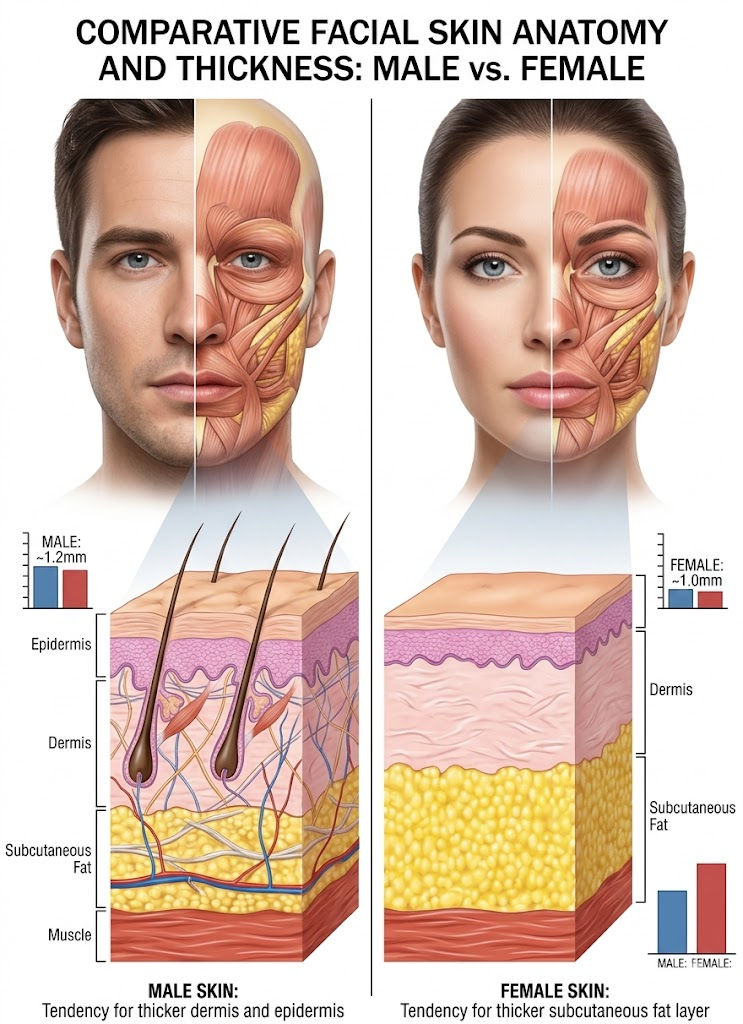
1. Anatomical Dimorphism: Why Male Parameters Deviate
According to JDD Online, male facial aging is characterized by distinct skeletal changes and skin physiology. Men possess a more prominent supraorbital ridge and a wider mandibular ramus.
Skin Thickness & Vascularity: Male skin is approximately 25% thicker with a higher density of adnexal structures (hair follicles and sweat glands). This leads to increased vascularity, which means men are at a higher risk for hematomas and post-treatment erythema.
Adipose Tissue Distribution: Unlike the softer, more superficial fat often found in female patients, male fat—especially in the "love handles" and abdomen—tends to be more fibrous and dense. This biological difference necessitates a specialized approach to thermal energy delivery.
2. The Male Cryolipolysis Temperature Control Guide: Precision for Fibrous Fat
To rank for the Cryolipolysis Temperature Control Guide, we must address the specific challenge of treating male adipose tissue. Men often seek treatment for the flanks and submental area, where the fat is structurally tougher.
Pre-Cooling Phase: Because male fat is more fibrous, the thermal conductivity differs. A professional guide for men suggests a longer pre-vacuum cooling phase to ensure the core of the fat "butter stick" reaches the required -11°C.
Temperature Stability: Maintaining a steady state is critical. While female patients might respond to a broader range, the male fibrous fat layer requires a Cryolipolysis Temperature Control Guide that prioritizes peak energy extraction to trigger apoptosis in denser tissues.
The Post-Treatment Massage: JDD clinical reviews suggest that the manual massage following cooling is even more vital for men, as it helps break down the more rigid crystallized fat structures, improving the clearance rate by the lymphatic system.
3. Laser Hair Removal: Managing High Melanin & Deep Follicles
When adjusting Men's Medical Aesthetic Treatment Parameters for lasers, the goal is "effective destruction with epidermal preservation."
The Follicle Depth Challenge: Male terminal hair is deeper and more concentrated. This requires a laser with high peak power but a longer pulse duration (20ms to 40ms) to allow the heat to travel the full length of the follicle.
Aggressive Cooling: Given the higher vascularity mentioned in PMFA reviews, men are more prone to "thermal discomfort." Utilizing sapphire contact cooling at a constant 4°C is essential to prevent epidermal damage while the laser targets the deep bulb.
4. HIFU & RF: Contouring the Masculine Profile
The objective for men is usually "sharpening" rather than "softening."

Vectoring for the Jawline: Parameters for High-Intensity Focused Ultrasound (HIFU) should focus on the Gonial Angle and the Mentum. By targeting the SMAS at a depth of 4.5mm, clinicians can enhance the vertical height of the jaw, a key marker of male attractiveness according to JDD studies.
Avoiding Over-Feminization: Excessive volume in the mid-face can lead to a feminized appearance. Parameters should favor tightening and lifting (RF/HIFU) over heavy volumization (Fillers) to maintain a rugged, natural look.
Frequently Asked Questions (FAQ)
Q1: Why is the "Cryolipolysis Temperature Control Guide" different for men's flanks?
A: Male flanks (love handles) typically contain more connective tissue and fibrous fat. To reach the apoptotic threshold, the device must maintain a consistent -11°C for a full 35-45 minute cycle, often requiring a stronger vacuum seal to isolate the denser tissue.
Q2: Are men more prone to side effects from laser treatments?
A: Due to higher vascularity and thicker hair, men may experience more intense post-treatment redness. Following the Men's Medical Aesthetic Treatment Parameters for cooling—both during and after the procedure—is the best way to manage this.
Q3: Can we use the same HIFU depth for both men and women?
A: While the SMAS layer is present in both, men’s skin thickness means the energy might need to be delivered with higher "fluence" to reach the same depth effectively. Always consult the device's Men's Medical Aesthetic Treatment Parameters for depth-to-energy ratios.
Conclusion: Science-Backed Masculinity
To succeed in 2026, clinics must adopt a "Science-First" approach to male aesthetics. By utilizing this Cryolipolysis Temperature Control Guide and understanding the anatomical insights from JDD and PMFA, you can provide results that are not just visible, but biologically tailored to the male patient.
[CTA: Download our "2026 Clinical Parameter Chart: Male vs. Female Protocols" and master the art of the male profile.]


